Where is New Brunswick?





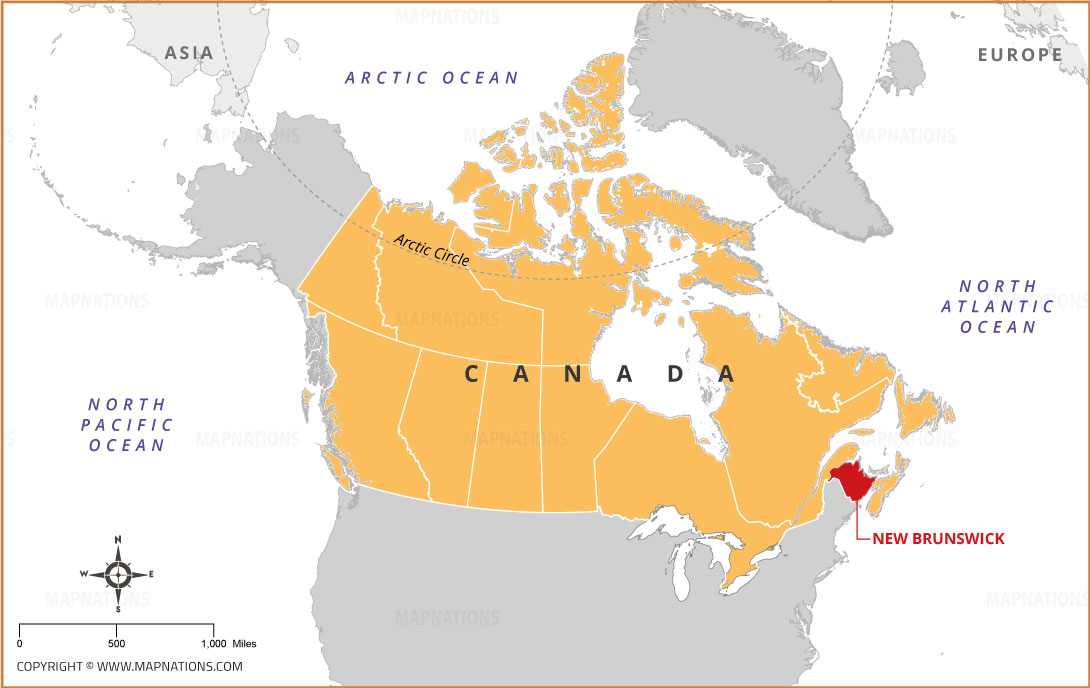
About Where is New Brunswick
Ontario is one of the ten provinces of Canada, located in central and eastern Canada. It is highlighted in red on the map, making it easy to identify its location. Ontario shares borders with Manitoba to the west and Quebec to the east, while the United States lies to its south. Toronto, the capital of Ontario, is Canada's largest city and a major economic centre. Ottawa, Canada's national capital, is also located in Ontario. The province is famous for its Great Lakes shoreline, forests, rivers, and beautiful landscapes. Ontario plays an important role in Canada's economy, tourism, and transportation.
Quick Facts About New Brunswick
| Fact | Details |
|---|---|
| Official Name | Ontario |
| State | Ontario (Province) |
| Country | Canada |
| Founded | July 1, 1867 (Confederation) |
| Incorporated | Upper Canada established in 1791 |
| Population | 16,258,260 (July 2025 estimate) |
| County | Not applicable; Ontario is a province |
| Area | Approximately 1,076,395 km² |
| Time Zone | Eastern Time and Central Time |
| ZIP Codes | Canadian postal codes; prefixes include K, L, M, N and P |
| Area Code | 204 is not Ontario; examples include 416, 437, 647, 519, 226, 905 and 289 |
| Known For | Toronto, Niagara Falls, the Great Lakes, forests and manufacturing |
| Major Airport | Toronto Pearson International Airport (YYZ) |
| Climate | Humid continental in much of the south; colder subarctic conditions in the north |
| Nickname | The Heartland Province (informal description) |
| Major Highways | Highway 401, Highway 400, Highway 11, Highway 17 and Highway 417 |
| Nearby Border | Not applicable at provincial level; neighboring provinces are Quebec and Manitoba |
| Major Attractions | Niagara Falls, CN Tower, Algonquin Provincial Park, Parliament Hill and the Royal Ontario Museum |
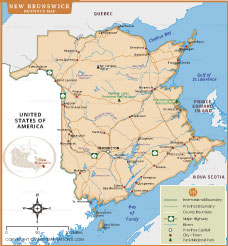
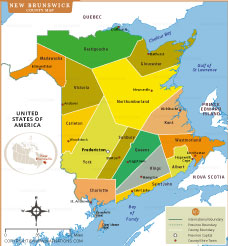
NEW BRUNSWICK MAPS
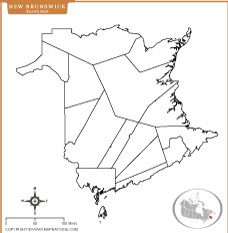
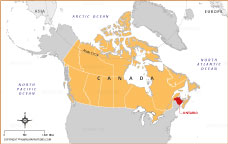
CANADA PROVINCE AND TERRITORIES
WORLD COUNTRIES
- Afghanistan
- Albania
- Algeria
- Andorra
- Angola
- Antigua and Barbuda
- Argentina
- Armenia
- Australia
- Austria
- Azerbaijan
- Bahrain
- Bangladesh
- Barbados
- Belarus
- Belgium
- Belize
- Benin
- Bhutan
- Bolivia
- Bosnia and Herzegovina
- Botswana
- Brazil
- Brunei
- Bulgaria
- Burkina Faso
- Burma (Myanmar)
- Burundi
- Cabo Verde
- Cambodia
- Cameroon
- Canada
- Central African Republic
- Chad
- Chile
- China
- Colombia
- Comoros Islands
- Democratic Republic of the Congo
- Costa Rica
- Cote d'Ivoire
- Croatia
- Cuba
- Cyprus
- Czechia
- Denmark
- Djibouti
- Dominica
- Dominican Republic
- Ecuador
- Egypt
- El Salvador
- England
- Equatorial Guinea
- Eritrea
- Estonia
- eSwatini (formerly Swaziland)
- Ethiopia
- Federated States of Micronesia
- Fiji
- Finland
- France
- Gabon
- The Gambia
- Georgia
- Germany
- Ghana
- Greece
- Grenada
- Guatemala
- Guinea
- Guinea-Bissau
- Guyana
- Haiti
- Holy See
- Honduras
- Hungary
- Iceland
- India
- Indonesia
- Iran
- Iraq
- Ireland
- Israel
- Italy
- Jamaica
- Japan
- Jordan
- Kazakhstan
- Kenya
- Kiribati
- Kosovo
- Kuwait
- Kyrgyzstan
- Laos
- Latvia
- Lebanon
- Lesotho
- Liberia
- Libya
- Liechtenstein
- Lithuania
- Luxembourg
- Madagascar
- Malawi
- Malaysia
- Maldives
- Mali
- Malta
- Marshall Islands
- Mauritania
- Mauritius
- Mexico
- Moldova
- Monaco
- Mongolia
- Montenegro
- Morocco
- Mozambique
- Namibia
- Nauru
- Nepal
- Netherlands
- New Zealand
- Nicaragua
- Niger
- Nigeria
- North Korea
- Northern Ireland
- Norway
- Oman
- Pakistan
- Palau
- Panama
- Papua New Guinea
- Paraguay
- Peru
- Philippines
- Poland
- Portugal
- Puerto Rico (USA)
- Qatar
- North Macedonia
- Romania
- Russia
- Rwanda
- Saint Kitts and Nevis
- Saint Lucia
- Saint Vincent & the Grenadines
- Samoa
- San Marino
- Sao Tome and Principe
- Saudi Arabia
- Scotland
- Senegal
- Serbia
- Seychelles
- Sierra Leone
- Singapore
- Slovakia
- Slovenia
- Solomon Islands
- Somalia
- South Africa
- South Korea
- South Sudan
- Spain
- Sri Lanka
- Sudan
- Suriname
- Sweden
- Switzerland
- Syria
- Tajikistan
- Taiwan
- Tanzania
- Thailand
- The Bahamas
- Timor-Leste
- Togo
- Tonga
- Trinidad and Tobago
- Tunisia
- Turkey
- Turkmenistan
- Tuvalu
- Uganda
- Ukraine
- United Arab Emirates
- United Kingdom
- United States of America
- Uruguay
- Uzbekistan
- Vanuatu
- Western Sahara
- Venezuela
- Vietnam
- Wales
- Yemen
- Zambia
- Zimbabwe